What is PON? Passive optical network : types and applications

Contents
PON is the acronym for Passive Optical Network (passive optical network). It is the architecture that makes large-scale FTTH deployment possible : a single active device on the operator side (OLT) serves up to 128 subscribers through a 100% passive infrastructure (fibres + splitters with no electrical power).
This guide explains how a PON works, its different variants (APON, BPON, EPON, GPON, XGS-PON), its FTTx applications and the hardware components needed to deploy it.
What is a PON?
A PON (Passive Optical Network) is an optical telecommunications network that transmits data over optical fibre using a passive splitter (optical splitter) to route the signal from a central point to multiple destinations.
The word "passive" means that no component between the OLT (operator side) and the ONU/ONT (subscriber side) needs electrical power. The PLC splitter simply divides the light by 2, 4, 8, 16, 32, 64 or 128 without amplification, without a laser, without active electronics.
This absence of intermediate active elements explains the economics of FTTH : one operator fibre shared between 32-64 subscribers via a passive street box costs 10× less than dedicated point-to-point fibres.
Point-to-multipoint architecture (P2MP)
Three elements make up a PON :
- OLT (Optical Line Terminal) — at the operator central office. Sends and receives the optical signal for all subscribers on a single PON port.
- PLC splitter — passive box (street PBO or cabinet). Divides the signal into several paths (1×8, 1×16, 1×32, 1×64).
- ONU / ONT (Optical Network Unit / Terminal) — subscriber equipment. Receives the signal and converts it into usable Ethernet.
In downstream (OLT → ONT), all traffic is broadcast to every ONT ; each ONT reads only the frames addressed to it (a mechanism similar to shared Ethernet).
In upstream (ONT → OLT), the ONTs transmit in time windows assigned by the OLT (TDMA, Time Division Multiple Access) to avoid collisions on the shared fibre.
The main types of PON
| Standard | Year | DL/UL rate | Status |
|---|---|---|---|
| APON (ATM PON) | 1995 | 155 Mbps | Obsolete |
| BPON (Broadband PON) | 2001 | 622 / 155 Mbps | Obsolete |
| EPON (Ethernet PON, IEEE 802.3ah) | 2004 | 1.25 / 1.25 Gbps | Asia, alternative operators |
| GPON (Gigabit PON, ITU-T G.984) | 2003 | 2.488 / 1.244 Gbps | Dominant global standard |
| 10G-EPON (IEEE 802.3av) | 2009 | 10 / 1 or 10 Gbps | EPON migration |
| XG-PON (ITU-T G.987) | 2010 | 10 / 2.5 Gbps | GPON transition |
| XGS-PON (ITU-T G.9807) | 2016 | 10 / 10 Gbps | 2024+ standard |
| NG-PON2 (ITU-T G.989) | 2015 | 40 Gbps (4×10G WDM) | Enterprise niche |
| 50G-PON (ITU-T G.9804) | 2021 | 50 / 12.5 or 50 Gbps | Emerging 2025+ |
Modern evolutions : towards multi-Gigabit
Modern standards increase the rate while remaining backward-compatible with existing GPON via WDM multiplexing (different wavelengths). Operators can add XGS-PON to their GPON infrastructure without replacing everything :
- GPON : 1490 nm down, 1310 nm up
- XGS-PON : 1577 nm down, 1270 nm up — on the SAME fibre as GPON, in parallel
- NG-PON2 : 4 simultaneous wavelengths in TWDM (Time and Wavelength Division Multiplexing)
PON applications : the FTTx family
| Acronym | Meaning | Description |
|---|---|---|
| FTTH | Fiber to the Home | Fibre to the home (ONT at the subscriber's premises) |
| FTTB | Fiber to the Building | Fibre to the building, internal distribution over copper |
| FTTC | Fiber to the Curb | Fibre to the curb/cabinet, last metres over VDSL copper |
| FTTN | Fiber to the Neighborhood | Fibre to the neighbourhood, extended copper distribution |
| FTTA | Fiber to the Antenna | Fibre to the 4G/5G base stations |
| FTTO | Fiber to the Office | Fibre to enterprise offices |
Advantages of PON
- Reduced infrastructure cost — one operator fibre serves 32-128 subscribers via passive splitter
- No power outdoors — passive splitters, no maintenance, no power failure
- Scalability — adding subscribers without pulling new fibre as long as splitter outputs remain
- High bandwidth — 1G shared (GPON) or 10G (XGS-PON), enough for 32-64 simultaneous subscribers
- Future-proof — migration GPON → XGS-PON → 50G-PON on the same fibre
- Low latency — typically < 1 ms between OLT and ONT
PON hardware components
Elfcam components for PON deployment
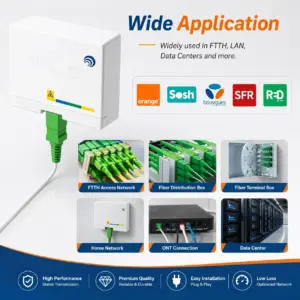
- PLC splitters 1×2, 1×4, 1×8, 1×16, 1×32, 1×64 — central passive components
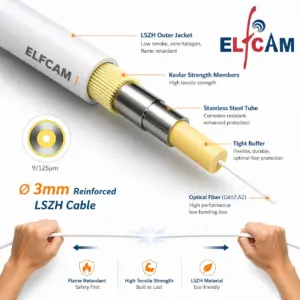
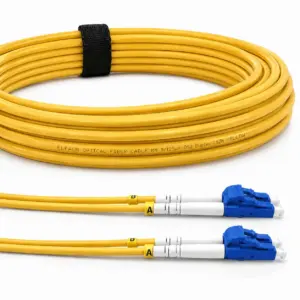
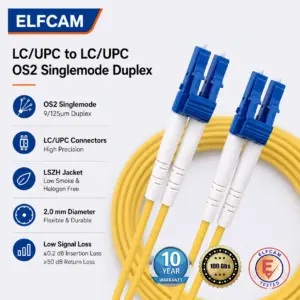
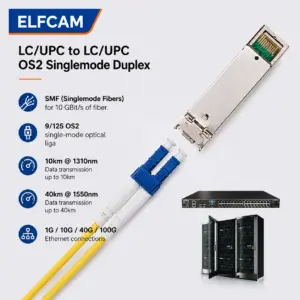
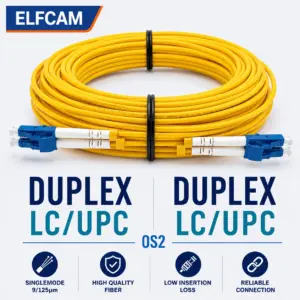
- OS2 fibre cables single-mode for long-distance distribution
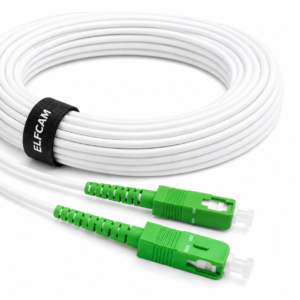
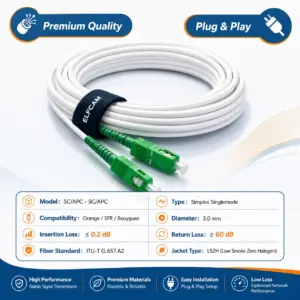
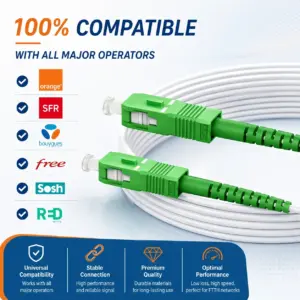
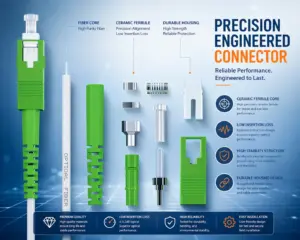
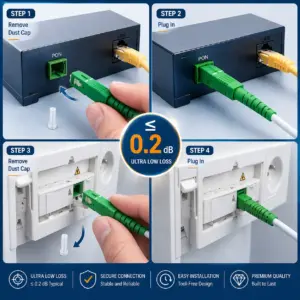
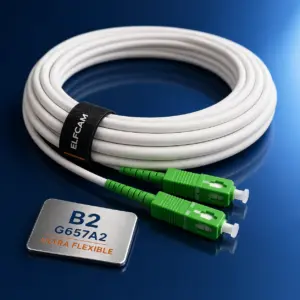
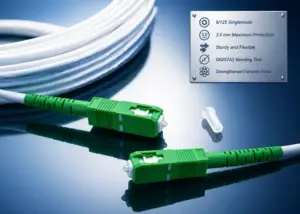
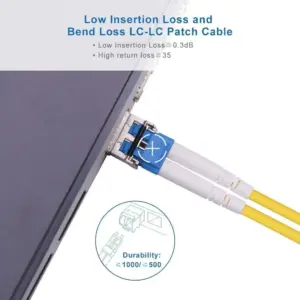
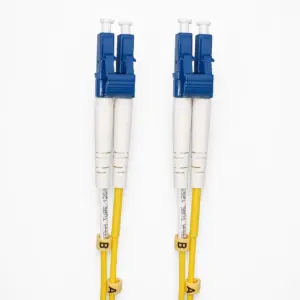
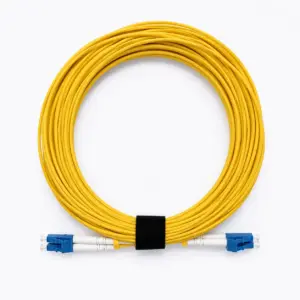
- SC/APC patch cords for OLT and ONT connection
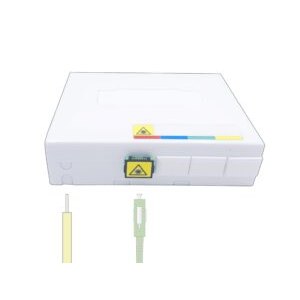
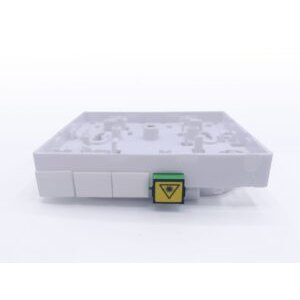
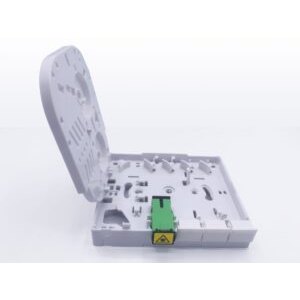
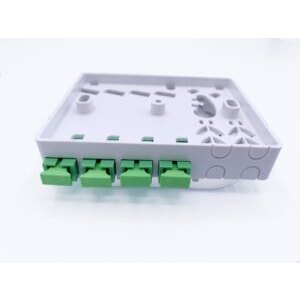
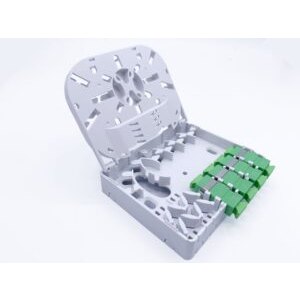
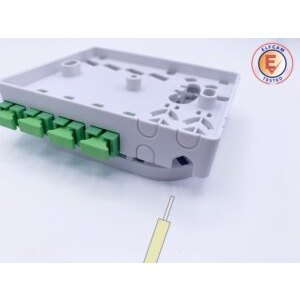
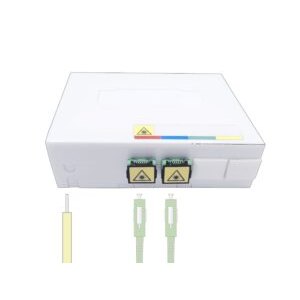
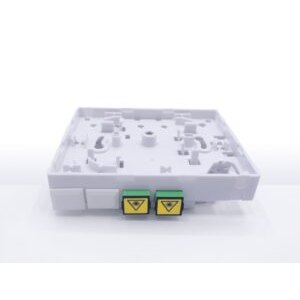
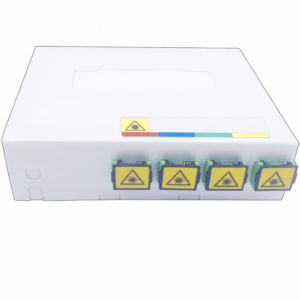
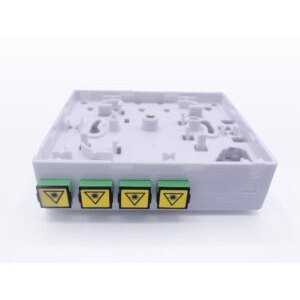
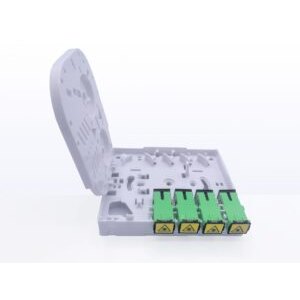
- PTO (Optical Termination Outlets) on the subscriber side
- 19" rack ODF trays for central patching
- SFP+/SFP28 modules for OLT uplink







FAQ — PON passive optical network
1PON vs Active Ethernet : what is the difference?
Active Ethernet (point-to-point) : one dedicated fibre per subscriber, Ethernet switch between OLT and subscriber. Higher performance (1-10 Gbps dedicated) but more expensive (3-5×) in CAPEX. PON massively dominates the consumer and SME market, Active Ethernet is reserved for enterprises, datacentres and alternative operators.
2Why is PON "passive"?
3What is the maximum distance in a PON?
4How many subscribers on a typical French PON?
5Is XGS-PON compatible with GPON?
6Can PON do IPTV multicast?
7Splitter 1:32 vs 1:64 vs 1:128 : how to choose?
- 1:32 — balanced, comfortable rate per subscriber, distance up to 15-20 km
- 1:64 — maximum density while staying performant, standard for French operators
- 1:128 — only with XGS-PON or low-activity subscribers
8Where to buy PON splitters and accessories?
In summary
PON (Passive Optical Network) is the architecture that democratised FTTH : economical, scalable, with no electrical maintenance on the distribution side. The modern evolutions (XGS-PON, NG-PON2, 50G-PON) guarantee the infrastructure's longevity for 15-20 years.
To deploy or maintain a PON, see our PLC splitters, OS2 fibre cables and compatible SFP+ modules. For operator projects, contact the Elfcam team via Support.